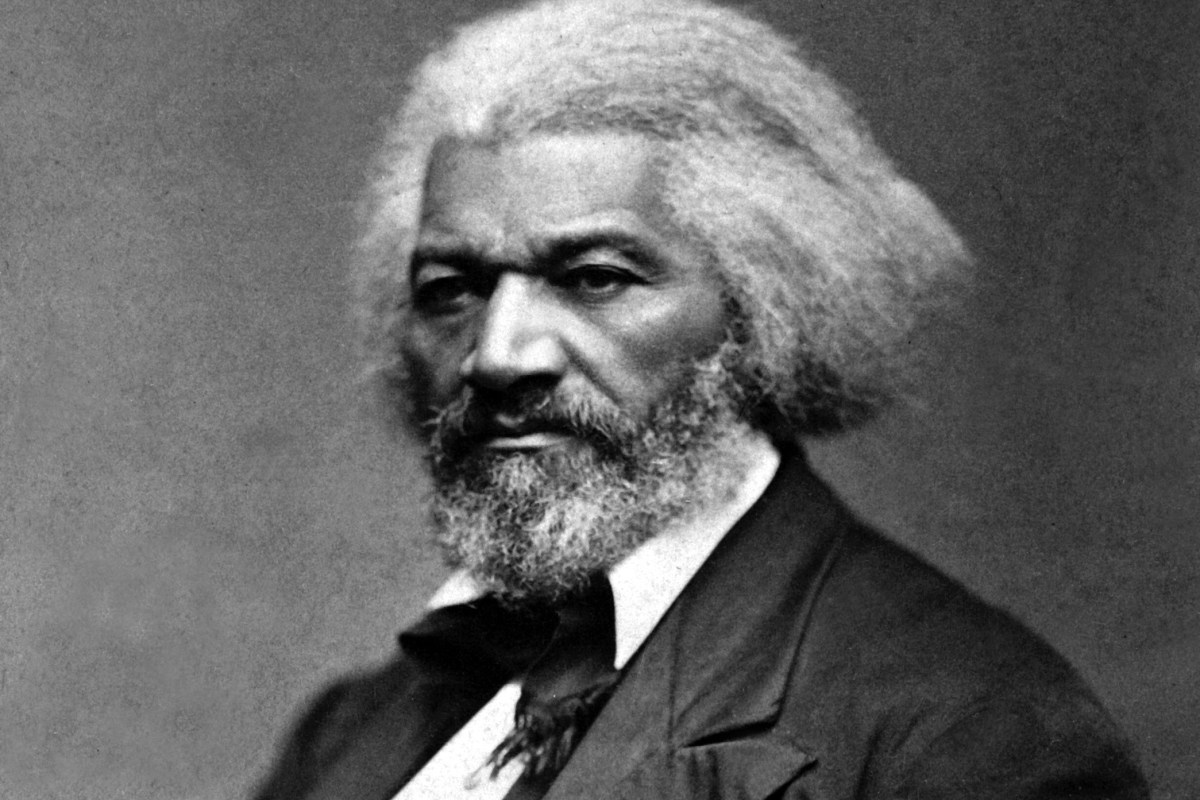
Sparks Flying, Smoke Drifting

I’m a Christian. I am also a Baptist. Truthfully, I’m not very good at being either of them, but one of those statements is more important than the other. (Which one is, in certain circles, open to debate.)

That said, historically, it was tough being a Baptist. Everyone hated us. It seems like the only thing the Pope and the Protestants could agree on was that beating, jailing, drowning, burning, or at the very least mocking the “Dippers” was a good idea. I’m surprised we don’t have more examples from church history of heresy trials involving the defendant saying something like, “Well, at least I’m not a Baptist.”

Eventually, sanity prevailed, and most of the various branches of Christianity woke up to the fact that killing people that disagreed with you was probably not the best way to honor Jesus. That made it much safer to be a Baptist, but it was still a great way to get people to look down their noses at you. In many American communities, for example, you could bet that the rich people were Catholic, the important people were Presbyterian, and the ditch-diggers were Baptist.

This less-than-rigorous and way-too-short historical review has a point: is it any wonder, given our history, that Baptists got a bit proud of our status as outsiders? That the constant pressure from without led to a tendency to puff out our chests and put up our dukes at the slightest provocation?

Baptists have a reputation for fighting others, and one another, is what I am trying to say. We take what we get, turn right around, give it back, turn halfway around, and give it again.

But what if that’s a feature, not a bug?

I never thought so before. I have frequently lamented my circle’s seemingly infinite ability to see a mosquito and break out a machine gun, or get invited to a pillow fight and show up with a sawed-off.

But then, while reading Roland Allen’s classic Missionary Methods, I was struck by the following quote:

“St. Paul…must have foreseen strife and division. He must have deliberately preferred strife and division, heart-burnings, and distresses, and failures, to laying down a law. He saw that it was better that his converts should win their way to security by many falls than that he should try to make a short cut for them. He valued a single act of willing self-surrender, for the sake of the Gospel, above the external peace of a sullen or unintelligent acceptance of a rule.”

Allen wasn’t talking about Baptists, but he might as well have been: “strife…division…distresses…failures.” But he lands someplace surprising: these are still better than superficial “peace.”

Undoubtedly, there is a vast difference between fighting over whether or not Jesus is God and fighting over whether or not the carpet should be blue or brown. One matters and one doesn’t.

But is it possible that having fought over the color of the carpet (and having repented of our foolishness), we are more prepared to go to the mat when it counts? Is not the faith that is tried through repeated trials, even those caused by our sinfulness, stronger than the faith never tested?

You bet.

Now, for the wisdom to know the difference between carpet and Christ…

What Business Are We In?

I recently came across this article from Pastor Steven J. Cole while preparing to preach on Acts 13:1-3. I appreciated his words but didn’t realize until after I preached just how much they had influenced me. I think I quoted or referenced points he had made more than the text itself! While it was a striking homiletical failure on my part, I have found my mind returning time and time again to themes and ideas from the post.

Especially this question: “What is the main business of the church?”

When I first read it, my first thought was, “Business? Church isn’t a business!” But then I realized he wasn’t calling church a business but was talking about the church’s task, what we think we are about, what we do, why we exist. That clicked.

What we are supposed to be doing is evident in the Word. I summarize it like this:

The Church exists to glorify the Father by being disciples of Jesus who love God and love people and make disciples in the power of the Spirit.

We are so used to doing “church” the way we’ve always done it that we never stop to think about what we should be doing. I am fond of quoting whoever said that “every system is perfectly designed to give the results it gives,” and nowhere is that truer than in the church world.

If the business we are in is truly to be disciples (a term that necessarily includes active engagement) then why is church producing so many passive spectators?

If our goal is to promote love for God (and Jesus says we’re to do that with all that we are) then why is church advertising so many ego-driven experiences?

If our stated agenda is to demonstrate love for people (the New Testament is pretty clear on this subject) then why do so many see love-in-word-only, bickering, and hatred from us?

If we are meant to make disciples (and we are: Matthew 28:18-20) then why are existing churches dying off right and left and new churches not being started among unreached peoples?

Because we have forgotten what business we are in and we are getting the exact results we should expect from the system we have created. And until we remember our true business, we will continue to forge uselessly ahead with our consumer-focused, preference-driven, numbers-obsessed busyness.

Be disciples.

Love God.

Love people.

Make disciples.

That’s our business. Oh, God, may we remember.

Image by Lorenzo Cafaro from Pixabay 

Rethinking The Race

I have never been the fastest runner. My soccer coach compared me to a freight train: slow to get moving, took a lot to keep moving, and hard to stop. Not only is that the likeliest explanation for my early transition to goalie, but perhaps it is also why an enduring visual memory from my elementary school days is of an out-and-back race. As I recall it, everyone was supposed to run out to a cone, run around it, and come back to the starting line. As I was lumbering up to my cruising speed, heading towards the cone, I began to see the faces of my classmates looking at me with triumph and pity as they raced in the opposite direction just inches from my left shoulder. They had already been to the cone, made the turn, and were heading back. And I was woefully behind.

I think that’s where Christ’s Church is at right now. We’ve spent the past two centuries getting up to speed, lumbering towards a wholehearted embrace of materialism and its attendant technology, and we are surprised to see that some of the irreligious masses we were running after have turned the corner and are looking at us pityingly as they speed back towards the numinous. But who said we had to go all the way to the cone?

When a friend shared Tim Dawson’s recent article in The Critic, this quote caught my eye: “Twitter and the twenty-four hour news-cycle is no place for a creature with a soul.”

I couldn’t agree more. We are creatures with souls and even irreligious Millennials are beginning to grasp the fact. The Church has much more to offer than modernism/individualism/escapism repackaged with a biblical twist.

I pray that the Church realizes that instead of running full-tilt after our culture, we could actually get ahead of the pack in an instant if we’d turn around now and go back to where we started.

I’d encourage you to read Dawson’s article here.

As a bonus, check out this article from Pew Research as well.

Why Do I Preach The Way I Do?

“Why do you preach the way you do?” 

When I was asked this question recently, I hesitated before answering. Not because I didn’t know my answer, but because I was unsure how to express my preaching philosophy in “normal” conversation. And I knew that the question arose because my preaching is markedly different from what is considered “normal” for our part of the country. So, I stumbled through what I thought was a confusing and meandering explanation. To my surprise, my friend said that it had been helpful and maybe I should write it down. So, (with significant editing for clarity) I did.

Why I Preach the Way I Do 

I want people to focus on Jesus

I generally don’t preach sermons with titles like “7 Biblical Tips for Handling Money” or “3 Goals for a Godly Marriage.” It’s not that there is anything inherently wrong with such sermons or such titles, but I believe that a steady diet of such preaching gives the impression that the purpose of the Bible is to help individuals get ahead in life. That’s not what the Bible is for: it is intended to point us to Jesus. I want to avoid taking the focus off of Jesus and putting it on the hearer’s self-improvement. In the Gospel of John, Jesus says that attempting to use the Word for any other purpose than seeing Him is futile and won’t produce the life God desires for His people: 

You don’t have his word residing in you, because you don’t believe the one he sent. You pore over the Scriptures because you think you have eternal life in them, and yet they testify about me. But you are not willing to come to me so that you may have life.

John 5:38-40

Instead of preaching sermons that reinforce our culture’s obsession with the self, the supposed source of satisfaction, I want to preach sermons that counter-culturally put all of the attention on Jesus, the true and only source of eternal life. 

I want people to get wisdom from the Word of God

When I preach, I try to make the point of the text the point of my sermon. I try to communicate the author’s intent for his original audience in a way that makes it clear for my audience. I try to use illustrations that either come from the text or reinforce the text. Why? Because people don’t need one more guy with a big head expounding his brilliant ideas or sharing memorable anecdotes (they’re getting plenty of that from social media and cable news). Instead, we need today what God’s people have always needed: God’s Word. Isaiah points out the reason why: 

A voice was saying, “Cry out!” Another said, “What should I cry out?” “All humanity is grass, and all its goodness is like the flower of the field. The grass withers, the flowers fade when the breath of the Lord blows on them; indeed, the people are grass. The grass withers, the flowers fade, but the word of our God remains forever.”

Isaiah 40:6-8

I am grass; the people listening to me are grass. My wisdom, such as it is, is like a flower; the audience’s attention span is like a flower. What happens to grass and flowers? They dry up and disintegrate over time. But the Word of God never will. I want to preach what lasts, not what won’t. 

I want people to know the breadth and depth of God’s Word

You are what you eat. I know it’s been said before, but people don’t generally remember what they ate for lunch three weeks ago. But that lunch affected them, remembered or not. It was taken in and broken down into constituent parts. Some of it stayed to become fuel and raw materials for building up the body, while some of it was expelled as waste. It was unremembered but productive nonetheless. I view preaching in much the same way: people won’t remember my sermons but, Lord willing, they will be gradually transformed by them. So, I want to ensure that they are getting a well-balanced diet, not a steady stream of favorite treats. Potato chips are generally more appealing than celery sticks: it is tempting to concentrate on familiar and favorite texts of the Bible and ignore the large chunks that seem difficult or irrelevant. Acts 20 records a meeting that the apostle, Paul, had with the elders of the church at Ephesus. During that meeting, he says, “…I declared to you the whole counsel of God.”

I want to be able to say the same thing because I know that we need the whole counsel of God, not just the parts we like. Because I don’t want to give people just what is easy to hear or easy to preach, I do not generally pick and choose Bible verses. Instead, I start preaching at one end of a biblical book and preach all the way through it to the other end. That way, I am sure we are receiving a complete meal, i.e., eating our “veggies” and our “potato chips.” Not skipping around means that we will both be wrestling with complex ideas and reveling in comforting passages.  

I want people to experience heart change 

Preachers are often like parents: we know that outward conformity is not the same thing as inward transformation, but it’s tempting to push for what we can see quickly rather than what lasts but takes more time. I don’t want to give in to temptation: I want to challenge myself and the people to whom I preach to be transformed, not merely modify their external behavior. This desire means that I try not to demand particular responses from people but trust the Spirit of God to stir and direct their hearts. Put another way: I do not want to cajole people into doing what I want them to do, what tradition says they must do, or what anyone else thinks they should do: I want them to do what God wants them to do. So, I rarely call for specific external behavioral responses (“don’t drink, don’t dance, don’t chew, and don’t go with girls who do”). Instead, I trust that they will, through the Word and the Spirit, “not be conformed to this age, but be transformed by the renewing of [their] mind, so that [they] may discern what is the good, pleasing, and perfect will of God,” as Romans 12:2 says. 

Transformation begins with a mind set on the things of God, not with legalistic attempts to look better than we are. Behavior does change, but only changes that begin with a changed heart and mind will last. 

I want people to move towards community

We live in an increasingly individualistic culture. The chief (and some would say only) tenet of Wicca is now the creed for many people from every walk of life, including many inside the church: “do whatever you want, so long as it doesn’t keep someone else from doing what they want.” Social media, entertainment culture, and much popular preaching reinforce the idea that the purpose of life is to “self-actualize,” whatever that means. The Good News of God’s Kingdom is reduced to “living your best life now” and “going to heaven when you die.” I guess the thought is that you get to do whatever you want without interference now and then continue for all of eternity. A terrible side effect of this idea is that it inevitably drives people further and further apart until, in the end, they are left with themselves, by themselves, and with no idea of how to even reconnect with others. I don’t want my preaching to reinforce this individualism. Instead, I try to preach the community-creating aspects of the kingdom even louder. Paul, writing to the Ephesian church, expresses the gospel’s effect of bringing individuals into a community: 

So, then, you are no longer foreigners and strangers, but fellow citizens with the saints, and members of God’s household, built on the foundation of the apostles and prophets, with Christ Jesus himself as the cornerstone. In him the whole building, being put together, grows into a holy temple in the Lord. In him you are also being built together for God’s dwelling in the Spirit.

Ephesians 2:19-22

I am not the temple of God: we are the temple of God. I am not a foreigner and a stranger to you: we are fellow citizens and family members. My goal in preaching is to speak to and about “us” as much or more than I do to or about “I” or “you.”

I want people to wonder and be curious and ask questions

One of the most intriguing statements in Jesus’ teaching is found in Mark’s Gospel. He records Jesus giving his parable of the soils and then writes, 

“when he was alone, those around him with the Twelve asked him about the parables. He answered them, “The secret of the kingdom of God has been given to you, but to those outside, everything comes in parables.”

Mark 4:10-11

I wondered about this statement for some time before a friend of mine, who led a college ministry and frequently took students through the Gospel of Mark, shared his insight with me: the secret of the kingdom is to be curious enough to ask Jesus for the answers. This insight led to me reexamining my preaching in light of Jesus’ example. I quickly realized that Jesus taught in a very open-ended style. He didn’t answer every possible question; indeed, he frequently seemed to introduce questions that he didn’t answer, all to get people curious enough to follow up with him. That doesn’t mean that I want to be intentionally obscure, but that my teaching should invite mature and ongoing conversation, rather than passive reception of my spoon-feeding the audience a perfectly blended and balanced puree that requires no further thought from them. Nor does it mean that I think I am the “jesus” who people should come to for the answers: instead, I want to go with them to the Word and work out His meaning together. 

I want people to leave on mission

The goal of my preaching is not to gather a bunch of people together to sit in front of me, entertain them so well that they’ll invite their friends to sit with them the next week, and repeat that until Jesus comes back. Instead, my goal is to see people move “from the seats to the streets,” as another preacher said. I do not preach to gather a crowd but to send out citizen-ambassadors to spread the Good News of God’s Kingdom. In Romans 10, Paul shows the goal of biblical preaching: 

“For everyone who calls on the name of the Lord will be saved. How, then, can they call on him they have not believed in? And how can they believe without hearing about him? And how can they hear without a preacher? And how can they preach unless they are sent?”

Romans 10:13-15

Paul is envisioning a circular sequence: Salvation is a result of calling on the name of the Lord, which happens when someone believes in the gospel that they have heard preached by someone who was sent as a result of having been saved by calling on the name of the Lord for salvation. 

I do not want to gather the same group of people each week to hear me opine about various topics: I want to preach to those sent to proclaim. Towards that end, a significant focus of my preaching is on the call for those who hear to go out and declare the truth that Jesus is King. I want people to be continually leaving the congregation I serve to go and take the gospel to places it has not been or has been forgotten. Going back to the beginning, I want the focus to stay on Jesus, and He calls His people to go, not sit. 

That’s why I preach the way I do. 

Dr. Todd Gray on Membership

There are certain people who, when they speak, I listen. Dr. Todd Gray is one of those people. His evangelistic heart, pastoral mindset, and servant leadership (not to mention his ability to say more in a 20-minute sermon than I can say in a 60-minute sermon) are an example and encouragement to me.

So his recent blog post caught my eye and I was struck by his list of seven of the responsibilities of a church member:

  1. I am responsible to attend the services of my church
  2. I am responsible to give financially to the work of my church
  3. I am responsible to pray for my congregation
  4. I am responsible to guard the unity of the church
  5. I am responsible to grow as a Christian
  6. I am responsible to serve according to my gifts and availability
  7. I am responsible to share the good news of Jesus

Needless to say, that’s a challenging list, especially because it’s not complete. And then this alliterative statement jumped out at me: “…a pandemic of personal preference.” He was identifying a problem in church culture and that line drove it home! I asked myself the question, “how often have I let my engagement in the Body of Christ be driven more by my preferences and “rights” than by the Word and the needs of those around me?”

I encourage you to read the full post here: https://toddgray.org/2022/01/31/members-or-owners/

Marriage, Divorce, Remarriage, and the Word of God

A Redemptive-Historical Approach

A good marriage has more potential for joy than any other human experience. A bad marriage has an almost equivalent potential for devastation. Marriage is a high-risk, high-reward proposition.

It’s no wonder, then, that many people are both excited about and frightened by the subject. Almost everyone has seen an example of a marriage relationship in which two people seem to flourish individually, grow together, and bless everyone around them. We want to experience that kind of relationship ourselves. Unfortunately, the opposite example is also easy to come by: two people made miserable, continually fighting or worse, and dragging everyone else into their drama. We want to avoid that like the plague.

              And then there’s what happens all too frequently: divorce. When a marriage goes bad, it can seem best and most straightforward to euthanize it. After all, won’t everyone be better off if the pain of proximity is eliminated? Unfortunately, as many divorced people can attest, things are rarely that simple. Instead, divorce brings with it a host of other pains and problems, including questions about self-worth, the next steps, and its impact on others.

             All of these issues are no less relevant for those who follow Christ. Because we believe that God ordained marriage and is personally involved with and concerned for marriage, they are even more relevant. And even more questions come up for those who are taking their relationship with God through Christ seriously. For example, what is God’s purpose for marriage? Far from simply being concerned with personal fulfillment, the Christ-follower wants to understand and submit to God’s intention for this most intimate of personal relationships. Or, is divorce permissible and, if so, for what reasons? While those who have entered a marriage for themselves need to consider nothing beyond themselves concerning ending that marriage, a Christ-follower has to ask whether or not Christ is ok with the whys and hows of ending a marriage. And, for those who have had marriages end in divorce, what about remarriage? The disciple needs to know whether or not they are free in Christ to remarry after a divorce or what the implications of remarriage are.

             The best way to answer these questions is to look at the Bible. However, without the proper framework, merely consulting the various biblical texts that deal with marriage, divorce, and remarriage one by one can muddy the waters instead of clearing them up. The biblical text reveals, guides, and instructs, but only when we approach it on its own terms, not piecemeal.

            The terms of engagement I believe the Bible is best understood by are those of a redemptive-historical approach. This approach seeks to understand any topic by how Scripture speaks to it in each of four subsections of the history of God’s redemptive work. These four subsections are, 1) Creation, 2) Fall, 3) Redemption, and 4) Completion.

             Loosely defined, “Creation” refers to that period of history between God’s speaking everything into existence and humanity’s rejection of his position as Sovereign King by disobeying his command. “Fall” refers to the time between humanity’s initial disobedience and Jesus Christ’s resurrection from the dead and the Holy Spirit indwelling his followers. “Redemption” is the period in which Christ’s people are living and spreading the gospel before his return. And “Completion” is the future point at which Christ will return to completely conquer sin and death and bring his people into a glorious eternity.

            Concerning the questions of marriage, divorce, and remarriage, these four historical epochs provide a framework for a more precise understanding than is possible with a text-by-text approach. To gain this clarity, I will consider some of the relevant biblical texts on marriage from within each epoch and then attempt to weave all the information into a panoramic view of the institution.

Four Aspects of God’s Will for Marriage

Creation Texts: Marriage in a Very Good World

  • Genesis 1:26-31 – While this passage has a great number of implications for our understanding of mankind, it relates to marriage in at least a couple of ways. First, the creation of “male” and “female” and the implication that this two-fold state of being was essential to “mankind.” This prototypical marriage is demonstrated to have an impact beyond the individuals involved in it and to bear witness to a wider unity in humanity. Second, the union was to have multiple purposes all of which can be subsumed under the larger category of stewardship. The relation of “male” and “female” as “mankind” was to be a part of their producing and expanding the work of God in the untamed world.
  • Genesis 2:15-25 – This passage zooms in on the creative work of God as it relates to humanity. The man is created and tasked with tending and preserving the Garden the Lord had made. However, the Lord declares that it is “not good for the man to be alone.” By himself, the man cannot do what God intended mankind to do. The Lord’s provision of a “helper” (the Hebrew word here could be understood as “an ally in battle” or “one who rescues” and is frequently applied to God himself in the rest of the OT) is the first marriage ever. It sets the stage for all subsequent marriages, as the author of Genesis notes (“for this reason…”). Marriage, the uniting of male and female, is essential to the work of stewardship that mankind was given. In this passage we also see the goodness of work (assigned before the fall), male headship in marriage (Adam created first and the one to whom the Lord gave the commands), and sex (a recognition of physical compatibility along with no shame).

Fall: Marriage in a Broken World

  • Genesis 3 – In this terrible passage, we see the upending of God’s order (man rules over beasts, God commands man, husband leads wife) in a beast approaching the woman, contradicting God, and the woman leads her husband. This upending of order is at the root of all sin and its impact on all of creation is evident from the rest of the Bible. However, its effects on that marriage and all subsequent ones is also clear. First, the stewardship tasks assigned to the couple (care for creation and producing offspring) are made more difficult and painful. Second, the relationship of the man and woman are made antagonistic instead of mutually beneficial. Instead of gladly serving alongside her husband, the wife will now desire to advance her own agenda and to have control of her husband. Instead of lovingly leading his wife, the husband will now rule despotically over her, thinking only of his own desires. Not only that, but the punishment of their sin and the cutting off of the way to the tree of life will mean that this relationship will inevitably be cut off by death. This death could almost be considered a mercy in light of the disharmony introduced into the relationship.
  • Genesis 4:1 – Though the marriage has been deeply impacted, along with the rest of existence, by sin, God’s original plan is still in play, and his sovereignty is still recognized. The woman sees that her bearing a son is by the Lord’s hand. Though mankind rejected God, God continues to involve himself in human affairs, even to the most intimate of setting by ordaining the fruit of Adam and Eve’s union.
  • Genesis 9:1-7 – The call to Noah is remarkably similar to the call to Adam and Eve, indicating that even with sin, God’s plan remains for human stewardship and all that it entails. Marriage, and the fruit of marriage, is still a critical part of that plan.
  • Exodus 21:10-11 – This passage, dealing with a wife taken from slavery, has also been interpreted by saints as detailing a woman’s rightful expectations from a marriage, without which she is free to seek a divorce. A husband must provide 1) food, 2) clothing/shelter, 3) sex. If he does not, she is free to leave and he must let her leave. This interpretation has been challenged by others, however. Regardless, there is a recognition in the Sinai law that marriage, intended to be a lifelong relationship, is now breakable.
  • Deuteronomy 24:1-4 – Like the Exodus passage, this text demonstrates the possibility of a marriage covenant being broken. The key terms are “favor” and “indecency.” In Jesus’ day, there was an argument among Jewish scholars as to what grounds for divorce were permitted by this passage. Some argued that anything that caused a wife to lose “favor” with her husband was grounds (burnt dinner, declining beauty, etc.). Others argued that only if the cause of the lack of “favor” was “indecency.” The phrase underlying “indecency” is literally “the nakedness of a matter” and likely refers to immorality of a sexual nature. The law most likely would not have in view actual adultery, because the punishment for that was death. Instead, the key to this passage is that once a marriage covenant is broken, and a new one instituted, the involved parties cannot subsequently be remarried. The overarching emphasis was the seriousness of both marriage and divorce, that they should not be trivialized or entered into or exited lightly. 
  • Proverbs 18:22 – This proverb serves as a brief reminder amid the Old Testament record of marital failure (David’s adultery, Solomon’s many wives and concubines, the patriarchs’ terrible family relationships, etc.) that marriage is still a good thing. It is tempting for Christians to join the broader culture’s mockery of marriage, but biblically we cannot: it is a painful and difficult thing, but still good.
  • Hosea 1-3 – These chapters serve as a summary of the many Old Testament passages in which God is portrayed as a husband to his people. Here, Hosea’s continued faithfulness and refusal to divorce Gomer is a picture of God’s rejection of his people’s sin and yet his redemption of them by not finally divorcing them and instead wooing them back to himself. The picture we get is that while divorce may sometimes be an option in a broken world and in a broken marriage, it is not a requirement.
  • Malachi 2:13-16 – This passage is one of the most frequently quoted biblical passages on divorce and yet is one of the most ambiguous. This comes from the difficulty of translating the Hebrew here. Consider the following translations:
    • NIV: “The man who hates and divorces his wife,” says the LORD, the God of Israel, “does violence to the one he should protect,” says the LORD Almighty. So be on your guard, and do not be unfaithful.
    • NASB: “For I hate divorce,” says the LORD, the God of Israel, “and him who covers his garment with wrong,” says the LORD of hosts. “So take heed to your spirit, that you do not deal treacherously.”
  • Malachi 2:13-16 (cont.) – The traditional translation, started in the KJV and seen above reflected in the NASB, indicates that God hates divorce. However, there is no first-person singular pronoun requiring it to be translated as “I.” Rather, I believe the better translation is that reflected in the NIV, which takes the third person, “he hates,” and properly reflects it. Especially in light of the latter part of verse 15 and the conclusion of verse 16: the Lord is warning and instructing men to be faithful to their wives, because if they break faith by hating and divorcing their wives, they are wronging themselves and her, while at the same time incurring God’s wrath against themselves. The traditional translation has often been used as a club against those who have legitimate cause for divorce rather than as a warning to those who do not. The second translation rightly puts the burden back on the guilty party rather than on the act itself.
  • Matthew 19:2-9 (cf. Matthew 5:31-32; Mark 10:8-12, and Luke 16:18) – Jesus’ teaching on the subject of marriage and divorce is recorded by each of the Synoptic Gospels and is remarkably simple and consistent (although Matthew likely gives Jesus’ fuller response that includes a recognition of the relevant statement in the Law and indicates sexual immortality as an acceptable reason for divorce). Regardless, Jesus’ position on the subject is clearly that divorce is always sin or the result of sin. His point, made clearest in Matthew, is that the current fallen reality of marriage, divorce, and remarriage was not God’s original design, nor is it an eternal reality. Instead, (cf. Mark 12:21-25) it would reach a final fulfillment in eternity that would negate the question once and for all. From the creation intention of God (one man, one woman, for life) any remarriage after a divorce is an adulterous one (giving to another what has already been covenanted to the first). Note that while this is the created perspective, Jesus does not indicate that God is unaware of the presence of hard hearts or ungracious to those who divorce or to those who divorce and remarry. Nonetheless, the starkness of Jesus’ teaching should drive a deep conviction about the seriousness of marriage, divorce, and remarriage into our consideration of the questions.

Redemption: Marriage in a Redeemed World

  • 1 Corinthians 7:1-40 – The most extended discussion of marriage in the New Testament introduces the aspect of marriage in light of redemption. Paul seems to be wrestling directly with the Lord Jesus’ teaching on marriage and trying to apply it to his Corinthian audience. Before we consider the text, it is worthwhile to note that he recognizes Jesus’ teaching to be correct, but as requiring expansion for the redeemed community to seriously live it out. Now to the text: Paul talks about the benefit of marriage for sexual fulfillment and as a curb to temptation. He talks, obliquely, about the sanctifying aspects of family life, and the possibility of gospel witness to spouse and children. But it is clear that Paul is less enamored of marriage than most American evangelicals today. Paul assumes that fidelity to Christ is the normative expectation for Christians. If maintaining that fidelity will be served by a Christian getting married, that marriage is good. If marriage will be an obstacle, idol, or distraction to that currently single Christian’s fidelity, it isn’t good. Our churches today tend to operate on the assumption that marriage is the normal course for the single Christian man or woman. Paul clearly teaches, though, that singleness is preferable for those able to be so and still honor Christ. First and foremost, this teaching stands against the marital idolatry of our Christian culture, which is simply a dressing up of our culture’s obsession with self-satisfaction through finding one’s “soulmate.” The notion that a fellow human being could provide fulfillment of our deepest desires strikes directly against the teaching of the Bible that God alone fulfills those longings. One of the main reasons we have so much divorce in the church is that we’ve both overvalued and undervalued marriage. We’ve overvalued its normativity and its ability to satisfy. We’ve undervalued its place in God’s great story of redemption and the incredible opportunities it presents for gospel proclamation and discipleship. This passage challenges our culture’s understanding of marriage at a fundamental level. Once that foundation is laid, Paul is able to say, in essence, “divorce is not an option for a believing couple because they are not dependent on marriage for fulfillment.” Secondly, he draws upon the teaching of Jesus (“not I, but the Lord”) and indicates that if, in a marriage in which both parties are believers, divorce takes place, the separating party should not remarry another. In a situation where one spouse is a believer, and the other is not, Paul gives essentially the same command: do not seek divorce because once the relationship is severed, the opportunity for gospel proclamation goes away. However, if the unbelieving spouse desires a divorce, then the believer should permit it. In such a case, the believing spouse is free to remarry as the one who didn’t seek the divorce and is now freed by the unbeliever’s choice. 
  • Ephesians 5:22-33 – If 1 Corinthians 7 is the longest discussion of marriage among the redeemed, Ephesians 5 is the most beautiful. Where 1 Corinthians seems to almost devalue marriage as a consolation prize for those who aren’t strong enough to control themselves, Ephesians grants a grand purpose and picture to marriage as a cosmological, historical, and relational masterpiece pointing us to God’s eternal plan of salvation. It is worth noting that Paul wrote both passages, which serves as a good reminder of the importance of considering marriage, divorce, and remarriage in light of ALL the biblical revelation. In Ephesians 5:22-33, we are introduced to marriage as a picture of Christ’s relationship with the church. Marriage itself points the world to the truth of the gospel. As a wife submits to her husband, she is demonstrating the church’s submission to Christ. As a husband loves his wife through self-sacrifice, the world sees Jesus’ love for and sacrifice for the church. Paul goes all the way back to Genesis 2:24: the marriage union has always been about Christ and the church. This ultimate meaning does not demean the other purposes and results of marriage: procreation, relationship, joy, shared burdens, etc. But it does indicate that those are secondary to the primary reason: marriage points us to the gospel. By setting the relationship between one man and one woman in this light, Paul is effectively shifting the conversation of marriage, divorce, and remarriage from “what do I want to do?” to “what does my decision say about the gospel?”
  • Colossians 3:18-19 – This passage could be called “Ephesians 5:22-33”-lite. Paul repeats his instruction for wives to submit and husbands to love, but adds instruction to both. For the wives, he says, “as is fitting in the Lord.” This idea of “fitting” is that of being appropriate or being natural to. In other words, submission is not a sign of weakness or inferiority but is a sign of Christ’s impact and reality in one’s life. His instruction to husbands is expanded from Ephesians in that husbands are commanded to “not be harsh” or “not be embittered towards” their wives. These instructions serve to remind believing couples that God’s design for marriage is not mere co-habitation or teeth-gritted continuation. Instead, they are to reflect Christ and genuine care and concern for one another in a covenant relationship.
  • 1 Timothy 5:9-14 – Paul’s reflections here regarding widows, especially younger widows, do not directly address divorce and remarriage, though it gives insight into marriage. Essentially, Paul continues his theme of seeing marriage as an instrument of sanctification and a potential force for good, particularly in verse 14. Of note is his statement on “not giving the adversary occasion for slander.” Marriage should not be the assumed “normal” for every Christian, but it is an effective tool against temptation and for witness.
  • Hebrews 13:4 – The author of Hebrews shows in this brief mention of marriage that its sanctity is the concern of every believer. By urging “all” to “honor,” he shows that marriage is not just an individual decision. Instead, the community of believers should be seen as vital to the strength and success of each marriage. This guards against the creation of a class hierarchy in the church, either of singles being elevated and considered more important or of the married being more well-regarded. Both situations have been the case in various points of church history. Also, when marriage is honored by all, then all have a stake in keeping the marriage bed undefiled. This defilement includes both sexual immorality before marriage and infidelity within marriage. The single struggling with sexual temptation is meant to look to the godly marriages in the church and be encouraged with strength and patience. The married person whose eyes roam to other bodies is corrected by the steadfast endurance of the single and the fidelity of other married believers. This passage is incredibly pertinent to the issue of divorce, as well. If all are honoring marriage and seeking to keep the marriage bed undefiled, then love and help for those struggling in their marriage will be readily and nonjudgmentally available. And, if divorce does take place, a committed fellowship will be there to help sort out the pieces and give guidance moving forward. Unfortunately, many churches today have neglected the full implications of this verse.
  • 1 Peter 3:1-7 – Peter’s commands to wives and husbands are not unique, but they add important considerations to the topic of marriage among the redeemed. Wives are urged to be submissive, not as doormats, but as missionaries. Peter sees, like Paul, the possibility of an unbelieving spouse being turned to faith by the consistent, humble witness of a believing spouse. But his statement goes further, as well, opening the possibility of a marriage in which both spouses are professing believers, but the husband is not walking in obedience. The solution Peter proposes is like if the spouse is an unbeliever: conduct that points their husband to Christ. For husbands, Peter issues the counter-cultural command to treat their wives as equals. While this is not noteworthy in our egalitarian culture, it was huge in Peter’s day. Men were seen as superior to their wives and didn’t have to think about them at all. Peter says that the Christian husband’s every action is to be engaged with thought for his wife, how it will impact her, how he can lead her to Christ, etc. Then he indicates that the husband’s relationship with his wife will have a direct bearing on his relationship with God. If he doesn’t live with his wife in a good relationship, his prayers will be hindered.

Completion: Marriage in a Perfect World

  • Mark 12:21-25 (cf. Matthew 22:26-30) – In these passages, the Sadducees try to trap Jesus with a question about marriage and resurrection. Jesus turns the table on them, revealing their ignorance of both the nature of marriage and the eternity that stretches beyond resurrection. Marriage is no longer a concern after the resurrection: it is temporary and confined to this life alone. He says that people will “be like angels” after the resurrection. There are many potential meanings to this statement. Still, at least several seem to be most likely: 1) angels don’t marry, 2) angels are so focused on God that they don’t need a marital relationship, 3) angels live forever, but marriage ends at death. Regardless of the precise meaning, Jesus clearly teaches that marriage is not a concern for the resurrected. Marriage is a fact with implications for the present age; resurrection is a fact with implications for eternity.
  • Revelation 19:6-9 – This passage reveals the target towards which all of history is rushing: the marriage supper of the Lamb. Why does the Church exist? To be united with Christ. Why does Marriage exist? To point to the union of God’s people with God. Why does each individual marriage exist? To serve as a foreshadowing of this marriage. This is why marriage is rendered fulfilled in eternity and no longer in effect: because the reality it was meant to point to has finally come. Just as a picture in your hand of the Grand Canyon is no longer needed when you’re standing on the rim of the Grand Canyon, so human marriages are no longer needed when this heavenly marriage is experienced in reality.

So, after that brief survey of the Bible’s teaching on marriage, divorce, and remarriage through four different epochs of God’s story, how do we stitch them together to get an overarching picture? This is my attempt:

Marriage was created by God, to enable mankind to fulfill the commands of God, and was designed to be a covenant relationship between one man and one woman, for life. When mankind rejected God’s authority to command them, the effects of that rebellion on marriage were catastrophic. Now, with hearts given to sin, men and women were not just rejecting the God who had made covenant with them, they began to reject the spouses they made covenant with. God, in His mercy, gave the Law to the nation of Israel and sought to mitigate the effects of sin on marriage relationships by allowing divorce for sexual immorality and/or lack of provision of food, clothing, and sexual intimacy. When Jesus, the ultimate revelation of God, came, he pointed back to the original design of marriage, rather than to the Law, as the definitive guide. When the promises of God were fulfilled in Jesus’ death and resurrection and the coming of the Holy Spirit, marriage regained its first intention and priority among God’s people. No longer were God’s people to divorce, but their marriages were to be showcases of God’s steadfast commitment to his people and his people’s unswerving submission to him. The only time divorce was potentially allowed to nullify a marriage covenant was when an unbelieving spouse chose to leave the marriage. In such a case, the believer was free to remarry. If a divorce took place for any other reason, the parties were to remain unmarried so that reconciliation could potentially take place. This elevation of the seriousness of marriage among the redeemed serves to point the world and the church to the coming of eternity and the union of God’s people with God forever.

            This statement, if accurate and accepted, would not have a minimal impact on the American church. Marriage has long been both idolized and trivialized, divorce has become common, and remarriage is rarely examined. I am not unaware of the difficulty of consistently applying the Bible’s teaching on marriage in our current context. So, let me make several further clarifications that I see as implications of the broader Scriptural witness:

  1. Divorce before conversion is different from divorce after conversion. Jesus taught that, outside the kingdom, the hardness of hearts made divorce an occasional necessity. If a now-believing brother or sister was divorced before having their heart of stone exchanged for a heart of flesh through the work of God in Christ through the Holy Spirit, they are redeemed from that and ought to be treated so.
  2. Many professing believers would not prove to be believers if biblical church discipline was upheld. Therefore, a faithful spouse whose outwardly-professing-but-likely-not-converted spouse divorces them would have been justified as a spouse abandoned by an unbelieving spouse, had the church pursued the course Jesus lays out for dealing with offending parties in Matthew 18.
  3. Many who professed faith earlier in life, fall away, and later “recommit” to Christ were likely unconverted before their “return.” Instead, their conversion happened when they were awakened to their sin, confession, and new submission. This is not true in every individual case. Still, it is worth considering whether or not a person had indeed been converted before a divorce or ended up being truly converted afterward.
  4. There is no such thing as a perpetual or unforgiven sin for the faithfully repenting believer. Thus, a sinful divorce and remarriage do not continually mark them as adulterers. Instead, they ought to demonstrate through their commitment to their current spouse the transformation of sanctification.
  5. Blanket statements are usually more harmful than helpful. Therefore, a case-by-case approach is best within the church fellowship regarding the appropriateness of divorce or remarriage.

7 Reasons Churches Shouldn’t Celebrate Pastor Appreciation Month

As far as months go, October really stands out. Fall colors in the trees, lots of crisp mornings and clear nights, the sudden availability of pumpkin spice-flavored everything, and more.

Unfortunately, it’s also Pastor Appreciation Month. It may seem strange that I, a pastor, would lament that this month has been unofficially but nonetheless nationally recognized as “Pastor Appreciation Month.” And yet, I do.

I have read posts from other pastors, church leaders, and church members expressing the necessity of a month dedicated to appreciating pastors. I’ve read guides for how to give better gifts during this month. But I’ve read startlingly few pieces questioning whether or not we should actually have this weirdly-niche holiday in the first place.

Because I don’t think we should have it.

It’s not that I don’t think it’s biblical to appreciate pastors; I just don’t think Pastor Appreciation Month is the best way to go about it. I understand that I am probably in the minority. If your church still chooses to celebrate it, I don’t plan on fighting you over it. But here are seven reasons I think churches shouldn’t celebrate Pastor Appreciation Month:

1. It is artificial

Pastor Appreciation Month isn’t a natural holiday, like New Year’s Day. It’s not a civic holiday like July 4th. It’s not a religious holiday like Christmas.

It’s an artificial holiday. It was invented by a group of clergy in 1992, promoted by a prominent Christian organization in 1994, and bought into by Christian retailers throughout the country as a great way to unload their overstock of pastor’s office tchotchkes.  It’s not the only artificial holiday, nor does its artificiality mean it is automatically unworthy. (I mean, Valentine’s Day is a manufactured holiday, but ask a boyfriend or husband who has neglected it to his own detriment if it is a worthy holiday.)

But, its artificiality is a reminder of its dispensability. The church and its pastors survived for a long time without it, and we can do so again.

2. It is awkward for visitors

Imagine a scene with me: you have just moved to a new area. You’ve never really been a church-goer, but the new setting, loneliness, and curiosity have led you to “check out” the church down the street. You walk in, are warmly greeted, chat with someone you recognize from the office of your apartment complex, and sit down in a well-lit, comfortable room. A guy gets up and prays to start the worship service. A band plays songs that, while unfamiliar, tug at your heart and bring a few tears to your eyes. Then, another guy gets up, directs you to open the Bible you find under the seat in front of you, and shares a message that clearly comes from his heart and touches yours. He closes with a prayer, the band plays another song, and you are suffused with a sense of God’s goodness.

And then someone else stands up, grabs a microphone, and talks for five minutes about how much the pastor does for the church people, and how they should appreciate him every day, but especially this month, and that there will be an usher at the door with an offering plate, and everyone should give whatever they can so the church can buy him a nice gift.

How awkward is it for you, a non-church-going, non-pastor-knowing, first-time-visitor, to hear that announcement? What thoughts run through your mind as your contemplation of God is interrupted by it? Imagine what you’re feeling as you walk past that overeager usher pushing that plate in front of you?

Not good, right? Not only can it be a shockingly abrupt and uncomfortable intrusion, but it can also reinforce the lie that pastors are all about getting your money.

We are often tragically inattentive to the visitor amid our church gatherings, but even more so in our celebration of Pastor Appreciation Month.

3. It is awkward for church regulars 

Pastor Appreciation celebrations can be uncomfortable for church regulars, as well.

The typical bon mots about how hard pastors have it can sound a bit contrived to the ears of the single mom who serves in the nursery every week even though she works two jobs to make ends meet while she struggles to raise her kids alone.

The call to give generously in October can weigh heavily on the middle-aged man whose 20 years at the factory have him making a salary that’s half the pastor’s regular pay package.

The widow who struggles with loneliness may berate herself for the jealousy she feels when this person who has never even learned her name is praised as God’s gift to the saints.

Then there’s the false guilt that comes when someone forgets to organize a celebration or when they compare what their church did to what the bigger church down the street did or when the pastor seems ungrateful for what they did do.

Whatever the cause, Pastor Appreciation Month can lead to some awkward feelings and situations for those who are a part of the church but not a pastor.

4. It is awkward for pastors 

But it’s not just awkward for guests and church regulars; it is awkward for pastors, too.

Most pastors, myself included, really struggle with receiving compliments and gifts when it’s just one person giving them. We know that any good in us, any ability, any quality, is solely of God, not ourselves, so the compliment or gift ought to be directed at him and not us. And yet we don’t want to seem hyper-spiritual or falsely humble by denying the giver’s gift. So we stumble through a “thank-you” and feel like it isn’t enough and yet is too much, at the same time.

Now, compound that by 100, and you have the typical struggle of a pastor facing his congregation after they just feted him with a celebration dinner, had several church leaders speak about his excellencies, and handed him a generous financial gift.

What can he say, and how should he say it?

Or, the awkwardness can derive from another angle. Imagine a pastor who just accepted a call to his first church. He remembers October as Pastor Appreciation Month from his time as a church member. He thinks of the cruise that church sent the pastor and his wife on, the cards he made in Sunday School as a kid, the deacon chairman’s pat on the pastor’s back.

Then, his first October rolls around, and it’s crickets at his new church. Nobody says anything, does anything or acknowledges the occasion. His expectations weren’t met.

That’s awkward. But it could have been avoided if we simply got rid of Pastor Appreciation Month.

5. It cheapens pastoral ministry

One of the chief arguments for Pastor Appreciation Month seems to boil down to the fact that pastors have a hard job. But most pastors I know don’t need the reminders about how hard ministry is: they’re living that reality. But most pastors I know are still glad to serve. They didn’t get into ministry for recognition or an easy life: they did it to follow Christ’s commands. They don’t want to be singled out, they don’t want to be rewarded on earth: they’re looking forward to Jesus being exalted and joining with the saints in a heavenly reward.

Pastor Appreciation celebrations and gifts can give the impression, however unintentional, that the hard work of ministry can be rewarded here and now. That cheapens it. Pastoral ministry is not about what it gains the pastor in the here and now, and any pastor worthy of the title is not looking for such menial reward anyway.

These gifts can also be potentially manipulative or coercive. A church that gives a large Pastor Appreciation gift may be trying to keep a pastor in line. A pastor who receives such a gift may feel pressure to avoid saying or doing things that God’s Word demands of him for fear of offending his generous congregation. Either way, the ministry is diminished, changed from something that is God-directed to something that is financially-steered.

I understand that the same could be said for pastoral salaries. However, most churches provide a salary to free up the hours a pastor would generally spend working to provide for his family so that he can focus on his ministry. In such cases, the salary is not a reward, but a substitute designed to enable his service. The argument would stand, however, if a church or pastor viewed his salary as the bait on the hook for keeping him around or the stick for keeping him in-line or as payment for services rendered.

Regardless of your stance on that broader discussion, however, Pastor Appreciation Month doesn’t diminish the difficulty of the task; it cheapens it.

6. It reinforces the unhealthy clergy/laity distinction in our churches 

Frankly, I was torn on whether to put this reason first or last (the places where “science” tells us things are remembered most). I ended up not putting it first because it is too heavy a topic, and you would have quit reading. I didn’t want to put it last, because I wanted to not just be a Debbie Downer and actually give some positive statements about appreciating pastors at the end. So, here is where it landed and I hope you don’t forget it.

That October is Pastor Appreciation Month is one of the funniest ironies in all of Christendom. Why? Because it was on October 31, 1517, that Martin Luther first posted his 95 theses. While this document was basically an extended argument against the pope selling salvation to the highest bidder, it sparked the widespread movement we call the Protestant Reformation. (Ok, the funny part takes a while to develop). One of the fundamental tenets of the Reformation was the priesthood of every believer. This was opposed to the Catholic Church’s insistence that there was a distinction between the clergyman and the layperson. (Still developing…). The Reformation sought to reestablish the New Testament principle that, while every believer is gifted differently to serve, every believer’s gifts are essential, and all believers are equal. Yet, in October, the same month that kicked off a movement that sought to abolish the clergy/laity distinction, we reinforce just such a division with our celebrations (Hahaha! Get it? Ok, maybe it’s not as funny as I first thought).

The point is that Pastor Appreciation Month can, by definition, reinforce the perception that the pastor is the “professional” Christian and that the “amateur” Christian’s job is to recognize and encourage him and be his audience rather than his co-laborers. This continues the Catholic error of separating out one class of Christ-follower apart from all the others and elevating it in importance. Pastors may have God-given authority for their flocks in Christ, but they are also still sheep in need of the gifts of their fellow flock-members.

7. It can be a substitute for biblical pastor appreciation 

Finally, celebrating Pastor Appreciation Month can serve as a substitute for what the Bible actually commands as pastor appreciation. It is so much easier to write a card, write a check, and write off the much harder ways in which Scripture calls us to express our appreciation for those who lead us in the faith.

Look at Hebrews chapter 13:

Remember your leaders, those who spoke to you the word of God. Consider the outcome of their way of life, and imitate their faith…Obey your leaders and submit to them, for they are keeping watch over your souls, as those who will have to give an account. Let them do this with joy and not with groaning, for that would be of no advantage to you.

“Consider their way of life…imitate their faith…obey…submit” so that they can “do this with joy and not with groaning.”

That’s much harder, but I assure you that every single pastor I know would find such a lifestyle of appreciation much more valuable than any once-yearly gift or public thank you.

If that isn’t enough, look at 1 Thessalonians 5:

We ask you, brothers, to respect those who labor among you and are over you in the Lord and admonish you, and to esteem them very highly in love because of their work. Be at peace among yourselves.

“Respect…esteem…love…be at peace” all the time, not just once a year.

Most pastors don’t ask for a month dedicated to appreciating them. But God does ask his people to live a lifestyle that speaks to an appreciation for their pastors, but that is ultimately devoted to Christ every day of the year.

What Now?

I don’t want to be the pastoral neighborhood curmudgeon, scowling and mumbling about confetti in my yard. I totally understand that most churches, church members, and pastors celebrate Pastor Appreciate Month with no intention of making things awkward, cheapening the ministry, or avoiding biblical commands. And many churches, either because they can’t pay their pastor enough, or because they love him so much, enjoy the opportunity to take up a collection and bless their pastor. And many pastors probably take what is given to them and use it to bless others. For these, and many more reasons, I hesitated to post this piece.

Still, for all the good that is intended with Pastor Appreciation Month, I worry about the perception of a money-hungry ministry, I struggle with the reinforcement of a professional ministry, and I long to elevate every Christ-followers’ ministry. The organizational declaration of a particular month dedicated to pastors isn’t helpful in any of those regards.

And, ceasing to observe Pastors Appreciation month in our churches in no way hampers individual Christians from expressing their gratitude for their pastors. In fact, it probably opens more opportunities, and more genuine ones, at that. If a husband only showed his love for his wife once a year, on Valentine’s Day, how do you think his wife would feel about their marriage? Just so, a pastor will feel more appreciated when he receives cards, calls, texts, conversations, etc. from genuinely thankful church members all year long, than just during the “official” holiday.

So, it is with genuine feeling that I’m asking us to stop celebrating Pastor Appreciation Month. Instead, I want to challenge us to prioritize a genuine “building-up” among the saints all year long.

With that in mind, here are some closing words for various readers:

Fellow Pastors: Sorry if I rained on our parade. And if I am in error in my views here, please reach out and correct me. (brandonmckayboone @ gmail.com, minus the spaces, is the best way to get in touch).

Personnel/Other Committee Responsible for Pastor Appreciation Month Plans: If you are in charge of coordinating your church’s corporate celebration of your pastor in October, consider going a different direction. Write a letter informing the church members of the church’s commitment to biblical pastoral appreciation. Encourage them to send individual cards to their pastors if they feel led. Point out the Hebrews and 1 Thessalonian passages and urge them to prayerfully consider how the Holy Spirit would lead them in response. Share this post with those who have concerns: blame me, if you need to. And feel free to email me at the same address I mentioned above in my word to fellow pastors if you have any questions.

Disgruntled Church Folks: Please don’t send this post to your pastor or others in your church on November 1st as a form of protest against their celebration of Pastor Appreciation Month. Be at peace with one another. Matthew 7 is still in the Bible. Don’t ignore your Lord’s commands. Don’t cause your pastor to serve with groaning.

Other Church Folks: Pastors are just like any other people. They love to be encouraged; they want to feel appreciated. But not only does Pastor Appreciation Month not check those boxes most of the time, but it’s also not sufficient when it does. Instead, look to the Word and seek to encourage your pastors by following Christ whole-heartedly all year long. If there is a message that is particularly helpful to you throughout the year, take time to let him know (be specific as to how it helped you if you want to be extra encouraging). If you see an admirable quality in him, write him a quick note saying how grateful you are for his Christ-like example. Appreciate your pastor, not just once a year.

Non-Church Folks: Why did you read these 2300 words, exactly? If you’re not committed to a local church and submitted to its leadership, there are no pastors for you to appreciate, once a year or every day. Find a local church, commit to it, submit to its leaders, and then figure out where you stand on the issue. Email me at the same address I mentioned above in my word to fellow pastors if you need help finding a local church.

King Jesus and the American Dream

Eliciting much sympathy for the American church is hard. It seems we have been blessed with more widespread freedom, leisure, and resources than any other geopolitically-defined group in Christian history. While brothers and sisters in Christ starve physically and endure persecution socially in places like North Korea, Pakistan, Somalia, and others, we sit, seemingly fat and fit.

But, while we are indeed physically fat, we are not spiritually fit. When the Christian best-sellers list is filled, year after year, with gussied-up, pseudo-spiritual, self-help titles in which a bible verse actually quoted in context is as rare as the Western Plains Jackalope, we’ve got a problem. When our chief spiritual export to the world is a false gospel that says to the less-fortunate, “if you have enough faith, God will give you the kind of life we enjoy by the accident of our having been born in the land of the free and the home of the brave,” we’re sharing that problem. When both our pastors and the people they lead are more concerned with propping up a corrupt system of government than promoting the kingdom of Christ, we’ve crossed a line.

I know, I know: it’s not all bad. Incredible things are happening through various American churches, organizations, and individuals. But the primary weight of our collective Christianity is mired in a bog of spiritual apathy and ineptitude. The few still pulling us towards Christ are hampered, if not stymied, by that life-sucking weight.

What happened? How did all of our apparent advantages lead to this mind-boggling situation?

One reason is that we have an enemy and he convinced us that we could follow Jesus and live the American dream.

That Jesus could be our King and our lifestyle remain unchanged.

That so long as we prayed a prayer, sang some songs, and dropped 10% in the plate each Sunday, we could do what we wanted with the rest of our life.

That the needs of our brothers and sisters could be matters of prayer and not matters of sacrifice.

That our churches could glorify God even as they promoted their brand.

That concern for the poor is now the government’s job as we stuff our coffers and bedazzle our sanctuaries.

And it’s killing us. The lie that we can serve both God and money [or political power] is driving the American church over the cliff and into oblivion.

American Christians are certainly not the first in history to believe, erroneously, that we could have all the benefits of both this world and of the next. But we have mastered the art of trying.

We have stripped the call of Christ of its cost.

We have proclaimed the grace that saves while ignoring the fact that the same grace must sanctify.

We have dreamed up a discipleship full of instruction but freed from obedience.

More and more, I am convinced that the only hope for us, the American church, is to repent of our futile double-mindedness and return to the historical, biblical faith.

To recognize that,

“when Christ calls a man, he bids him come and die.” Bonhoeffer

To proclaim that while

“faith alone saves, the faith that saves is never alone.” Calvin

To reinstate biblical discipleship:

Go therefore and make disciples of all nations, baptizing them…(and) teaching them to observe all that I have commanded you.” Jesus

Let’s recapture the self-sacrificing, self-denying, others-seeking ethos of King Jesus and his kingdom and leave behind the self-promoting, self-satisfying, and others-ignoring lifestyle of our culture.

Let’s ditch the American Dream before Jesus ditches us.

Pray With Your Legs

“I prayed for twenty years but received no answer until I prayed with my legs.” Frederick Douglass

“Lift with your legs.”

Every weeknight, for a year, that’s the phrase I heard.

At the start of the shift: “Lift with your legs.”

After break time: “Lift with your legs.”

As I slept: “Lift with your legs.”

I worked as a part-time loader for a national shipping company and let’s just say workplace safety was important to them. We had group stretch before the shift, a safety briefing every night, and safety officers roaming the facility at all times.

“Lift with your legs.”

I resented it. As someone who grew up lifting hay bales, fence posts, and firewood with some regularity, I thought I knew something about working safely. I’d never torn a muscle, strained my back, or lost a limb.

So, I ignored the advice.

And, while you may have been expecting something different, I never had an accident at that job.

Nor at my next job, also one in which lifting heavy objects featured heavily.

“Lift with your legs” was advice for sissies. Or so I thought.

That is until about a year ago. Reaching for something small, I felt a twinge in my back. When I went to straighten up, the twinge became a stab as my lower back protested every movement.

Hot baths, a massage, lots of stretches, and about a week later I felt fine again.

The experience taught me a lasting lesson, however:

LIFT WITH YOUR LEGS!

See, I had made it 33 years ignoring that sound advice. And it hadn’t hurt me at any point along the way. But the cumulative effect of my idiocy was to make me more vulnerable to injury for the rest of my life.

If it was just my back, I’d shrug and move on, knowing that every body breaks down eventually. However, I see the same idiocy at work in my approach to spiritual things.

And that’s terrifying.

Prayer is a place where this is especially true.

Too often, I pray with just my head, engaged mentally. Or I pray with just my heart, engaged emotionally.

But, more and more, I am convinced that what I need is a spiritual safety officer standing over my shoulder reminding me: “pray with your legs.”

If you’re like me, you’ve heard that we should “carry our burdens to God in prayer and leave them there.”

Yes. That’s all well and good, but what if God wants us to do something about them?

One of the most fascinating examples of this occurs in Matthew 9 & 10. At the end of Matthew 9, Jesus calls his disciples’ attention to the gospel need of the world around them. He uses the metaphor of harvest and harvest laborers:

“The harvest is plentiful, but the laborers are few; therefore pray earnestly to the Lord of the harvest to send out laborers into his harvest.”

As a teenager, I took part in a 9:38 challenge. Every day, at 9:38 AM and PM, we prayed for the Lord to send laborers into the harvest. That challenge took seriously the need for disciples today to obey Jesus’ command to pray every bit as much as the original 12.

But what I somehow missed (not for lack of teaching by my pastors or parents) was that the end of chapter 9 is followed immediately by chapter 10. And in chapter 10 of Matthew, we read this:

And he called to him his twelve disciples and gave them authority over unclean spirits, to cast them out, and to heal every disease and every affliction…These twelve Jesus sent out…

Do you see what I missed? The 12 who prayed for laborers to be sent out were the very ones sent out. They became, in essence, the answer to their own prayer!

That story is fascinating because of the lesson it teaches. We know God wants the Kingdom to grow and we know that Jesus told us to go. We feel the impact of the reality that there are still so many who have not heard the gospel.

And we pray out of that knowledge and that feeling. I’m afraid, though, that like young, foolish me ignoring the injunction to “lift with your legs,” we ignore the clear message of Kingdom prayer in the New Testament: pray with your legs. We pray for the harvest, we feel the need of the harvest, but we have no intention of joining in the harvest.

When we do the work of prayer with our heads and our hearts, but not with our legs, we set ourselves up for spiritual injury. Our souls begin to curve inwards, to atrophy, and to shrink. By not connecting what we pray with what we do, we eventually get to the point where anything can debilitate us: a sin over which we have no victory, a circumstance that causes us to shake our fist at God, and slight at church that causes us to leave.

It doesn’t matter how much knowledge we can cram into a prayer. It doesn’t matter how much feeling echoes through our words in prayer. If we don’t intend to do anything in response to God’s movement, we will be spiritual cripples eventually.

But if we take our knowledge and our feeling and then we engage our legs in what we pray, we’ll find ourselves equipped for a long, healthy spiritual life.

Our prayers have plenty of head and heart: let’s give them legs. Let’s pray for laborers to be sent and then let’s gladly go as the Lord sends us to be the answer to those prayers.

Let’s ask him to expand the Kingdom and then get out and start sharing the gospel with coworkers, and inviting widowed neighbors over for dinner, and giving sacrificially so a fellow disciple can move overseas. Let’s be the kind of people who give up hobbies, comfort, homes, possessions, and whatever else may be required to go take the gospel to those who’ve never heard.

The quote that appears at the top of this post is from Frederick Douglass’s autobiography. A slave, Douglass prayed for freedom for twenty years, but as he said: “received no answer until I prayed with my legs.”

Douglass’s freedom required him to take action with his legs. His legs were the instrument that God used to answer his prayers.

As we pray for the harvest, I’m convinced ours will be as well.

Evangelism Shouldn’t Be Hard: It’s Just Telling People Good News

Evangelism Shouldn't Be Hard

Evangelism.
The mere word seems to send otherwise mature Christians running for the hills.
Potluck. “You know I’m in.”
Worship. “I hope we sing 10,000 Reasons again.”
But, “evangelism?”
“Uh, I’ve got something else going on.”

What is it about this word?

“Evangelism” is a Christianese word, but it shouldn’t be scary. When the New Testament was written, the word simply meant “the declaration of good news.” It was mainly associated with news about the king. The birth of a prince was good news. The coronation of a new king was good news. A king’s victory in battle was good news.

In our Christian context, evangelism is merely telling people the good news that the King was born. The good news that He died on behalf of messed up people like you and me. The good news that He rose again and is going to restore all things to their original, good design.

Telling good news isn’t a special skill. People don’t get degrees in “Delivering Good News.” Little kids, with no training whatsoever, are some of the best at telling good news: “Dad, dad, dad! You won’t believe it: I found a quarter!” “That’s great.” “No, it gets better: I bought, wait for it, a gumball with it!”

Somewhere along the line, we shifted things though. Evangelism went from being simply sharing Good News, to formulas, memorized outlines, and asking terrifyingly awkward questions. Moreover, it went from being something natural, like a kid excited about finding a quarter, to something you had to have specialized training for, a unique calling for.

Somewhere in the course of Christian history, evangelism moved from being the joy of every disciple to being the responsibility of a few specialists.

Reset

We need to reset the dial, regain the joy of every Christ-follower being engaged in telling the good news about the King.

To do that, we need to be reminded why it’s Good News in the first place. Jesus himself gives us a sketch of the Good News in John 3:16:

For God so loved the world, that he gave his only Son, that whoever believes in him should not perish but have eternal life.

Such a familiar verse, but one whose message has been lost in our evangelism-averse era of the faith. However, if we can regain an understanding of evangelism as simply telling good news…well, there is all sorts of good news here for us to share!

1. God’s unearned love is good news

The fact that God loves the world is a massive dose of good news. It’s especially good when you consider what Jesus means by “the world.” When he says that God loves the world, he’s not saying that God loves the penguins, and God loves the pandas, and God loves the butterflies. When he says that God loves the world, he’s talking about you and me. He’s talking about humanity, sinful humanity.

God created everything and has the right of creation to outline laws for his domain. He says, “here’s the way you ought to live. Here’s this good world that I’ve created.” And we throw it back in his face and say, “no thanks. We’re going to do it on our own.” We rebelled, and we continue to rebel.

We’re not worthy of God’s love.

And this verse tells us God loves us anyway.

He loves people who reject him. He loves the world, the broken, sin-ridden, filthily-foul, curse-riddled mess that we call humanity. He’s not waiting for us to love him: he loves us and invites us to encounter his love.

So, God’s love is good news, not because we love him and then he loves us, but because we hated him and he still loved us.

2. God’s gift of his Son is good news

People throw out the statement, “God is love” all the time. And, based on the context, many people never try to define that love. It’s like, to them, God is this big, amorphous blob of love, just oozing out everywhere with rainbows and cotton candy.

However, God’s love is clearly defined in Scripture. God loves in a very particular and a very costly way. It’s all right here in John 3:16: “For God SO loved the world that he gave his only Son…”

So.

We tend to interpret that “so” as meaning “God loved the world so much” as if Jesus was merely emphasizing the size of God’s love. Nope.

It means, “in this way.” God loved the world. How do you know? He gave his only Son.

God did something very specific to demonstrate the nature of his love because we needed at least two things to recognize his love: we needed to know who God really is and we needed someone to solve our sin problem.

Jesus reveals the true nature of God by being God. His birth, teaching, life, death, and resurrection show us God’s character and attributes more clearly than was ever revealed before.

That’s an act of love because we were created to know God and be known by him. When we rebelled against him, we lost that knowledge and humanity has been stumbling around in the dark, desperately creating gods in our own image, hoping to find the relational satisfaction we were created to enjoy but always coming up empty.

And when the scales fall from our eyes, and we see Jesus, our hearts leap and shout: “Here is the one who made me, who loves me, who calls me! Now I understand!”

But if all Jesus did was reveal God to us, our hearts would cease their exulting as our minds caught up: “But he’s so perfect, so right, so true and I’m so flawed, so evil, so false: I’m unable to relate to him because my rebellion has dug a chasm between us.”

So.

So, God didn’t just send Jesus to reveal himself: he sent Jesus to heal us. Jesus shows God’s perfection and then dies for our imperfection. The punishment that our sin deserved, death, Jesus takes into himself on the cross. He dies in our place. And because the punishment for our sin is accomplished, the guilt of our rebellion is done away with. That chasm is bridged, and all who will may walk across, back to fellowship with their Creator.

That’s good news.

3. God’s grace is good news.

So how do we walk across the bridge? Because it’s not enough for us to know who God is, that there’s something in us that’s broken, that has to be fixed. Somehow, it actually has to get fixed.

It gets fixed by us believing in Jesus. Jesus himself said, “I am the way, the truth, and the life. No one comes to the Father except through me.” It’s only by believing that Jesus is who he said he was and confessing him to be the Lord he is, that we can be saved.

Not, “work as hard as you can and hope that I’ll make up the difference.”

Not, “do x number of good deeds, pray y number of times, and never wet the bed, and I’ll let you off the hook.”

None of that. Believe.

You can’t earn God’s love, you can’t earn the solution to your sin, you can’t earn anything from God. Earning suggest owing and God owes his creation nothing. However, he offers everything to those who believe.

“It’s too easy,” we think. “Surely there’s something we have to do. Surely there’s something we have to contribute.”

Jesus says, “no, no, believe in me.”

That is God’s grace. God’s grace says you can’t earn it, you don’t deserve it, and yet God offers it anyway. This is why Paul tells us that the gospel is foolishness to the Greeks, a stumbling block to the Jews. We want the good news of God’s forgiveness to require something of us, up front. We want it to require us to be smart, to work hard, to earn it somehow.

However, we can’t, we don’t, we won’t. It’s grace through faith, a simple act of faithful obedience, not to a list of rules, but to the call of our Lord: “believe in me.”

That’s good news.

4. God’s offer of eternal life is good news.

Too many people, including the one writing this post, are tempted to think that this life is where we need to find our satisfaction, happiness, and joy.

And every single one of us is going to die disappointed unless we change our minds on that subject. Because the fact of the matter is that this life is too full of brokenness, too full of heartache, too full of disease and death and sadness to ever be what we need it to be.

Whether you have $2,000,000 in the bank or you don’t have two pennies in your pocket, you’re going to face hardship in this life. Money’s not going to solve the problem.

Whether you’ve got a spouse who loves you and completes you and is your soulmate, or you’re stuck in a marriage and think that getting out is the answer, or you want to be married and you can’t seem to find anybody, a relationship is not going to give you the life that you expect.

Money won’t. Relationships won’t. Stuff won’t. Fame won’t. Power won’t. None of it is going to outweigh the difficulty that inevitably comes by continuing to breathe. Humans live in a world that is marked by sin. We experience the effects of both our sin and the sin of the people around us. We deal with hard times day by day by day, and if this life is meant to be our fulfillment, we got a raw deal.

Jesus says, “Here’s the deal: you don’t have to believe in me. You don’t have to take the love that God offers. You can seek fulfillment in this life, and you may come close, but you’re not going to find it because, in the end, you’re going to perish.

But then he says, “Wait. Those who do believe in me will be given eternal life.” And not life like it is now: life like God intended things to be, forever. No more pain, no more cancer, no more dying, no more rape, no more starvation, no more brokenness.

That’s good news.

Tell The Good News

Evangelism is just telling people, “Hey, good news: this world isn’t all there is. It’s broken, I’m broken, you’re broken. But God wants to fix the world, and me, and you. So he sent his Son. Want to learn more about him with me?”

That’s not so hard. Evangelism, in the traditional, churchy sense might be hard, but telling good news: that’s easy.

So, let’s do it. Let’s start telling people the Good News.

John 3:16 is a pretty good place to start.